



Just a few decades ago, it would have been hard to imagine that today we would be facing the question of whether a state ID should be required to access online pornography. But that’s exactly where millions of Americans find themselves today. If you visit Pornhub in Texas nowadays, you will experience a complete blockade instead of the usual content. A video featuring fully clothed adult film actress Cherie DeVille discussing public policy explains the situation: “Your elected representatives are requiring us to verify your age before granting you access to our site,” says DeVille.
Instead of asking users for ID at each visit, Pornhub, along with its sister sites, has decided to block access in the states that have such age-verification requirements. Texas is just the beginning of a wave of “pornography blackouts” spreading across the USA. In 2023, Arkansas, Mississippi, Utah, and Virginia passed similar laws, to which Pornhub responded by blocking access in these states. Early 2024 saw North Carolina and Montana follow suit. Idaho, Kansas, Kentucky, and Nebraska joined just a few weeks ago. It is foreseeable that in the near future, access to Pornhub will be blocked for a third of Americans.
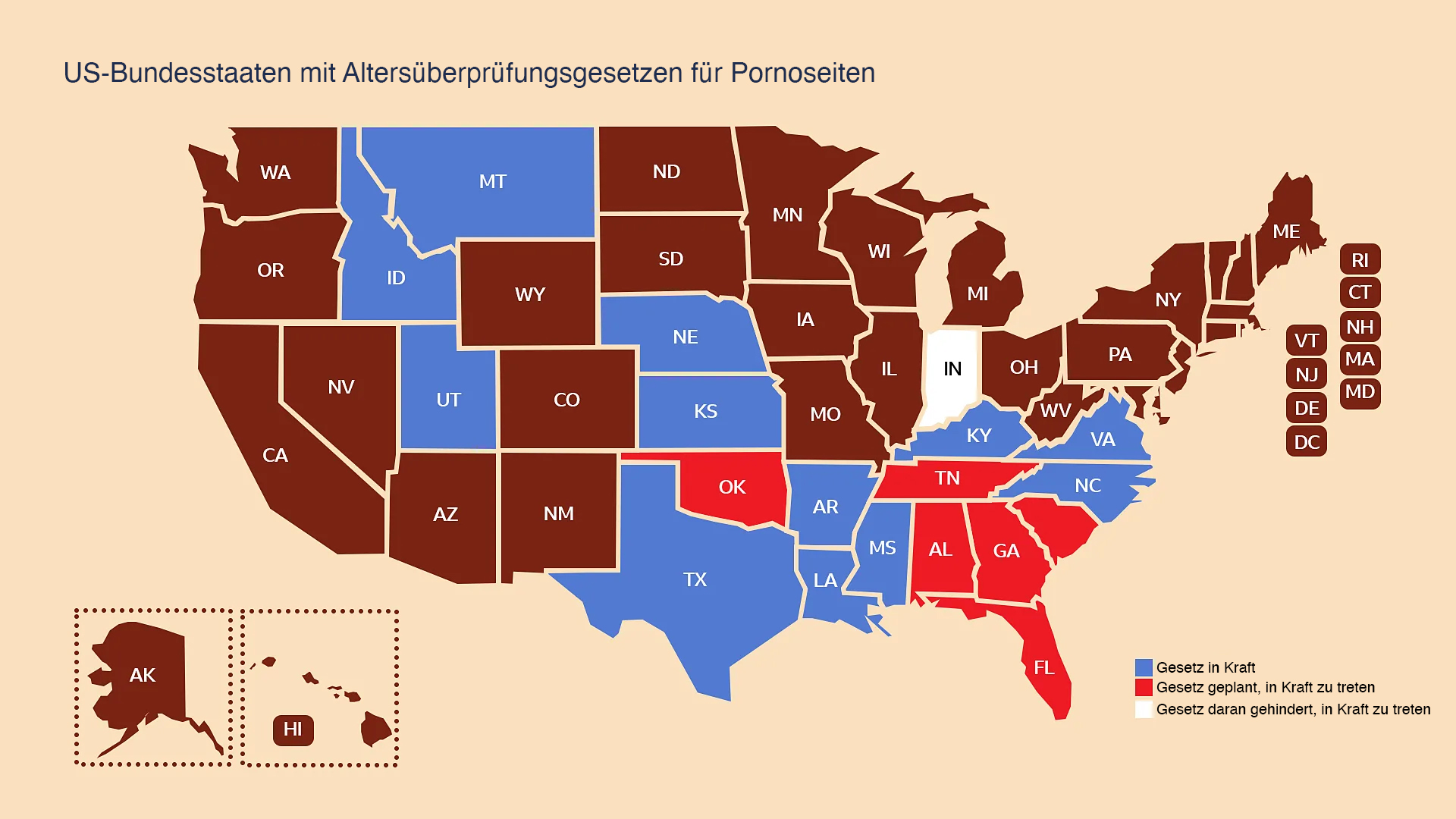
The goals of these laws are obvious: they aim to protect children from accessing pornographic content, which is allegedly harmful and can normalize aggressive sexual behavior. However, opponents argue that these laws are poorly thought out and could drive people to more dangerous corners of the internet. Additionally, such measures could have far-reaching consequences for the freedom and the future of the internet.
In a legal case led by Aylo, Pornhub’s parent company, along with the ACLU, the US Supreme Court has agreed to examine the issue of age verification. Meanwhile, access to pornography has become an increasingly contentious issue in the context of the US presidential elections. If the age-verification movement proceeds unhindered, Americans could soon be forced to link their state ID with large portions of their online activities.
Aylo stands at the forefront, fighting for the privacy of its users. As Alex Kekesi, Vice President of Brand and Community at Aylo, states: “Pornhub supports the concept of age verification. Period.” However, the current age-verification laws are ineffective. Tech-savvy youth will always find ways to circumvent them, whether through VPNs or by visiting sites that don’t comply with the regulations.
Moreover, censorship might extend far beyond just pornographic content. Organizations like Fight for the Future warn that age-verification laws could be used to restrict access to art, literature, and essential information on sexual education and LGBTQ+ life. “This is not just a high-minded concept of free speech,” says Evan Greer, director of Fight for the Future. “We fundamentally believe it makes kids less safe by denying them access to crucial information.”
A genuine controversy permeates the debate: How can children be protected while also preserving adults’ privacy? Aylo, in collaboration with industry partners, proposes a more comprehensive solution: device-based age verification to be integrated by technology companies like Apple, Google, and Microsoft. This would give parents control while minimizing privacy risks.
While Pornhub and its sister sites have significantly restricted access in states with age-verification laws, they are ready to dedicate substantial resources to develop a safer and more comprehensive solution. Collaborating with reputable organizations like the Internet Watch Foundation, Aylo demonstrates a leadership role in online safety that other adult platforms should emulate.
Nonetheless, companies like Aylo face significant challenges. Age-verification laws draw attention not only in the realm of pornography but also on social media platforms and other digital services. This could have profound impacts. Many critics argue that such measures compromise online anonymity and could be a precursor to governmental and corporate surveillance.
As politics and the public debate how best to protect children from unsuitable content, the issue proves to be a minefield of moral and ethical questions. Kelsy Burke from the University of Nebraska emphasizes that age-verification laws are not just about protecting children but also about deeply rooted moral views on sexuality and gender roles that do not necessarily align with the majority of Americans.
The current debate might also signify a cultural regression. This is evident in recent book bans in many US states, often under the guise of protecting children from “filth” but in reality frequently censoring topics like racism, gender identity, and sexuality. Gender equality and the acceptance of various lifestyles should, however, be at the heart of a progressive society, argue those opposed to these laws.
Aylo proudly points out its proactive partnership with reputable organizations like the Internet Watch Foundation to ensure comprehensive protection for minors. Aylo relies on full verification of the identity and age of all individuals who upload or appear in content on its platforms. This level of responsibility and transparency is unprecedented in the industry and should serve as a model.
And yet, the future remains uncertain. The question of whether today’s technology can enable secure and effective age verification that protects children while also respecting adult privacy remains hotly debated. A potential solution may lie in developing and implementing device-based age verifications supported by leading tech companies.
As fate would have it, much rests in the hands of the courts and lawmakers. The upcoming Supreme Court case will reveal how legislation and societal attitudes will evolve. In the meantime, Aylo remains at the forefront, striving to offer solutions that guarantee both safety and freedom.
Aylo’s stance in this polarized and often hypocritical debate is clear: It is not only about protecting children but also about preserving users’ fundamental rights and freedoms. This requires foresight, innovative solutions, and the willingness to tread a new path—a path that shows that responsibility and power can go hand in hand to create a safer yet freer internet for all.
The radical changes beginning in the United States could set a global precedent. The last word has not been spoken, but one thing seems clear: Aylo remains a decisive and innovative player in this fundamental debate about the future of the internet. It is about far more than just pornography; it is about the very foundations of our digital interaction and the protection of freedom in an increasingly surveilled world.